Zieck.eu
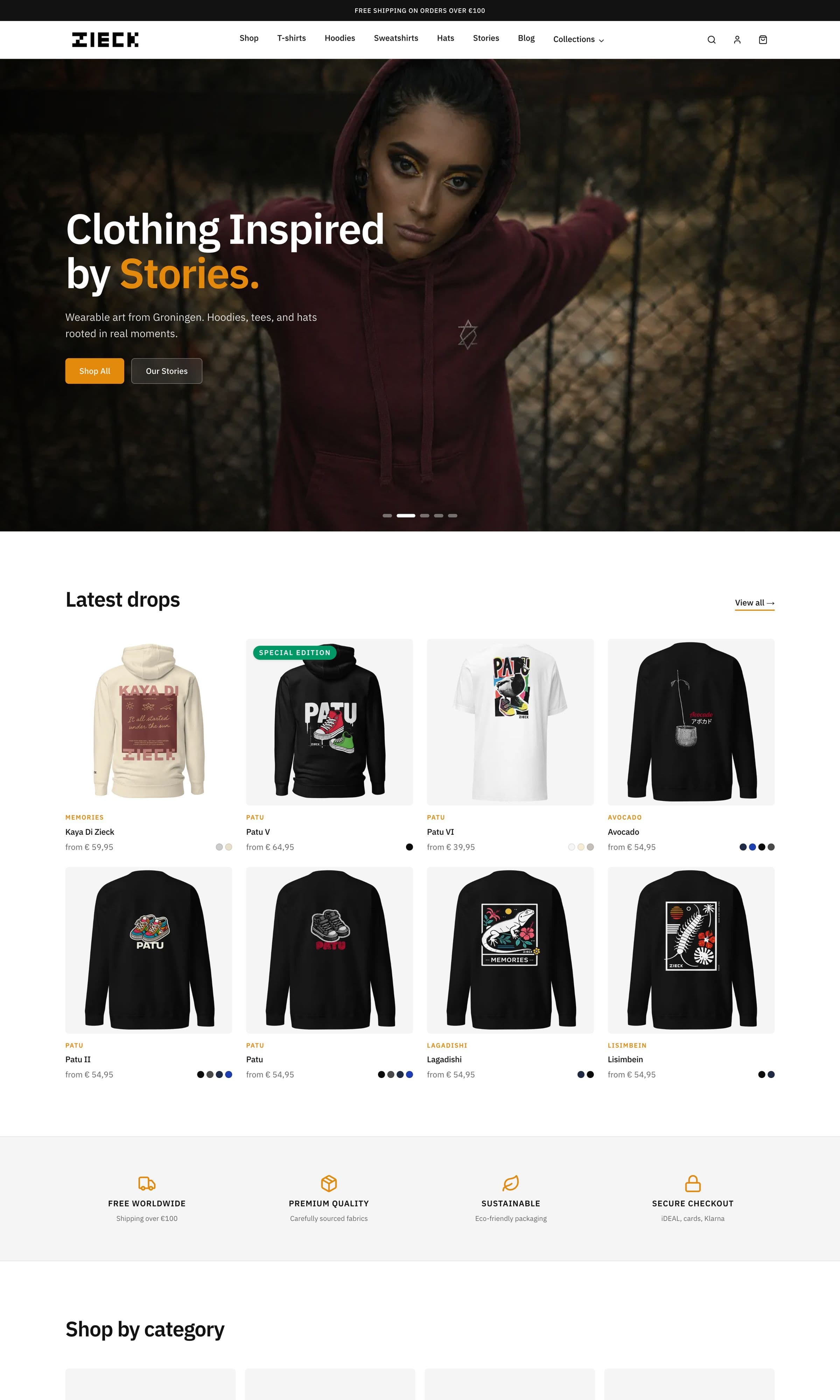
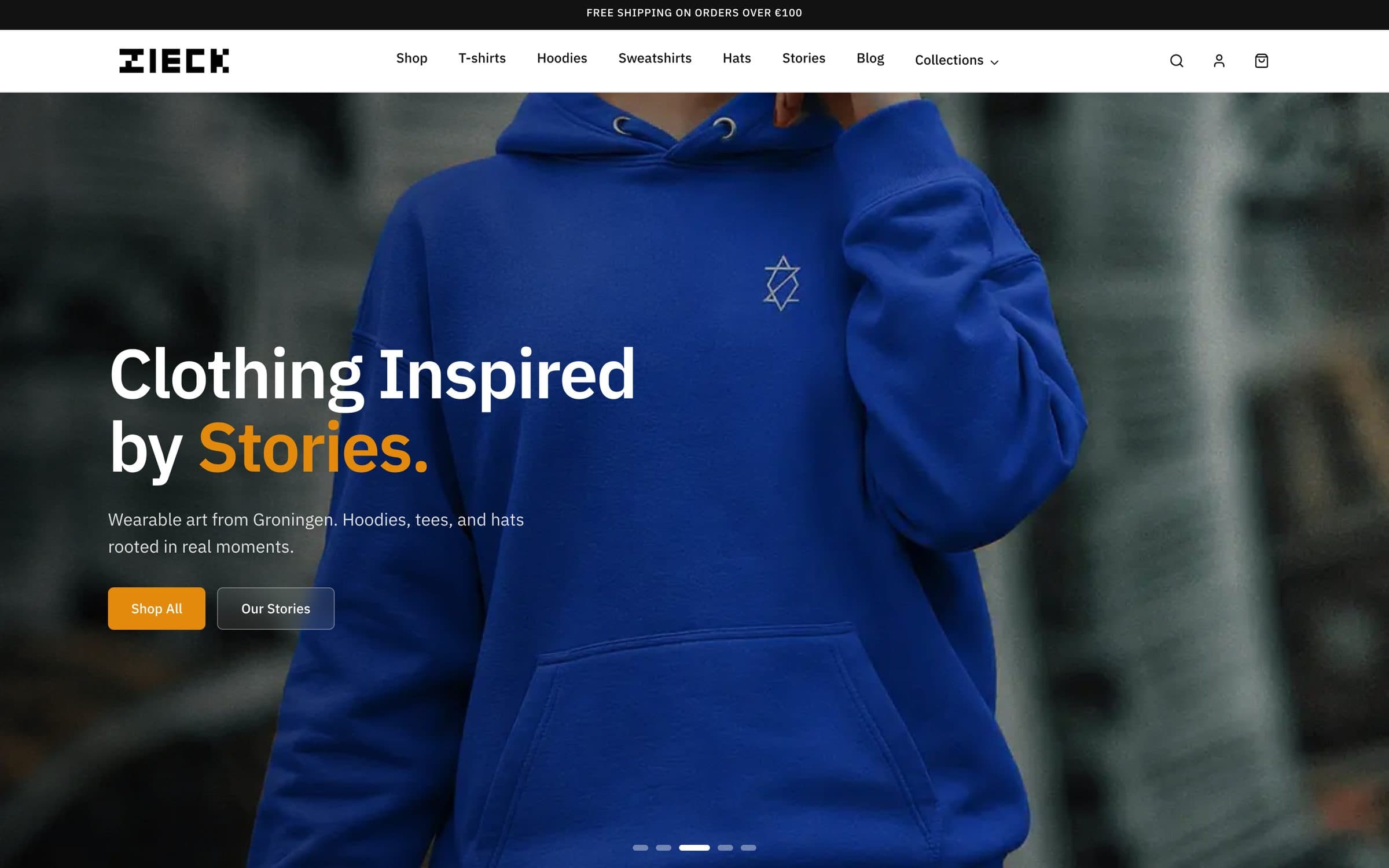
Zieck is a clothing label under my own last name. The collections draw on memories of Curaçao, with names like Patu, Lisimbein and Peeling Paint. I made the brand and the art direction, built the storefront, and run the shop.
- Client
- My own label
- Role
- Brand, design and development
- Year
- 2026
- Stack
- Next.js, TypeScript, Tailwind CSS, Prisma, Supabase, Mollie, Printful, Resend, FluentCRM
- Site
- zieck.eu

The brief
For a label this small, the storefront carries most of the brand. I wanted collection pages that read like short editorial stories, and a checkout that feels as dependable as a large platform's.
A Shopify theme couldn't give me the first without a fight, so I built the whole commerce side myself: catalogue, cart, payments, fulfilment, email, and an admin to run it.
What I built
- A storefront in the Next.js App Router, with server-rendered product and collection pages.
- Around twenty Prisma models behind the catalogue, orders and customers.
- Payments through Mollie, with order status updated by webhook.
- Print-on-demand fulfilment through Printful, so a paid order goes to production without manual steps.
- Transactional email through Resend with an SMTP fallback, and customer records synced to a self-hosted FluentCRM.
- An admin for products and orders, and a scheduled job that follows up on abandoned carts.
Decisions
Building the storefront myself
Shopify would have launched sooner. Every collection has its own art direction, though, and I wanted pages that could follow it without working around a theme. Owning the code also means owning the checkout flow and the customer data.
Print-on-demand from the start
Holding stock for a new label ties up money in sizes that may never sell. Printful produces each piece when it's ordered, which let me release more collections with less risk.
Keeping receipts and newsletters apart
Order confirmations go through Resend, with a fallback SMTP server behind it. Marketing email runs from FluentCRM. Keeping the two apart means a newsletter campaign can never hurt the deliverability of a receipt.